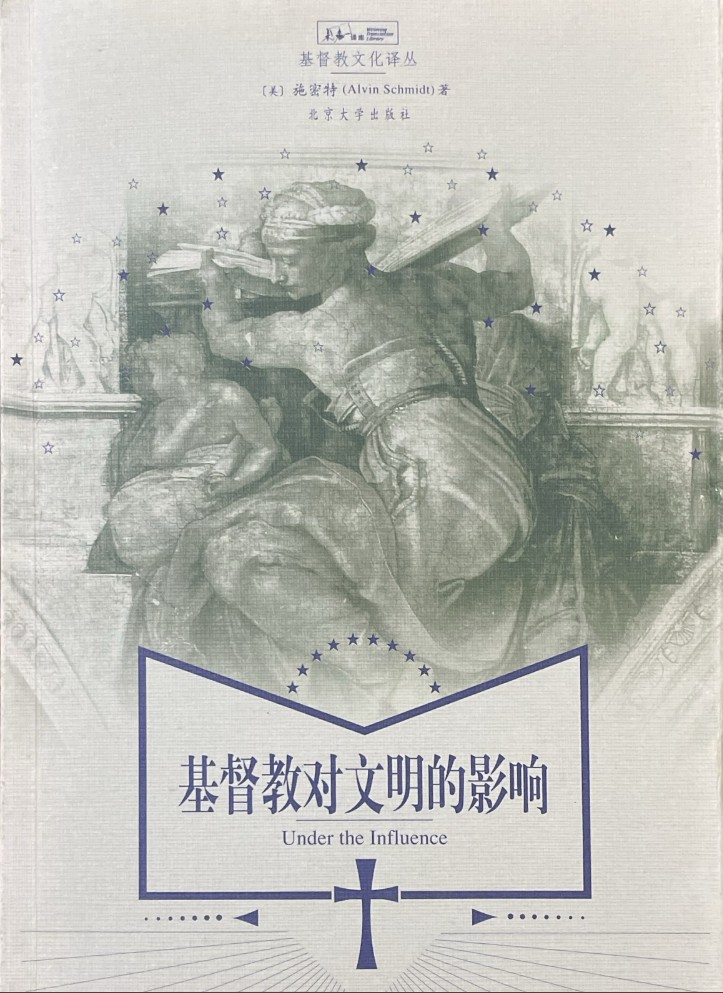
「基督教對文明的影響」
作者:施密特
譯者:汪曉丹、趙巍
出版社:北京大學出版社
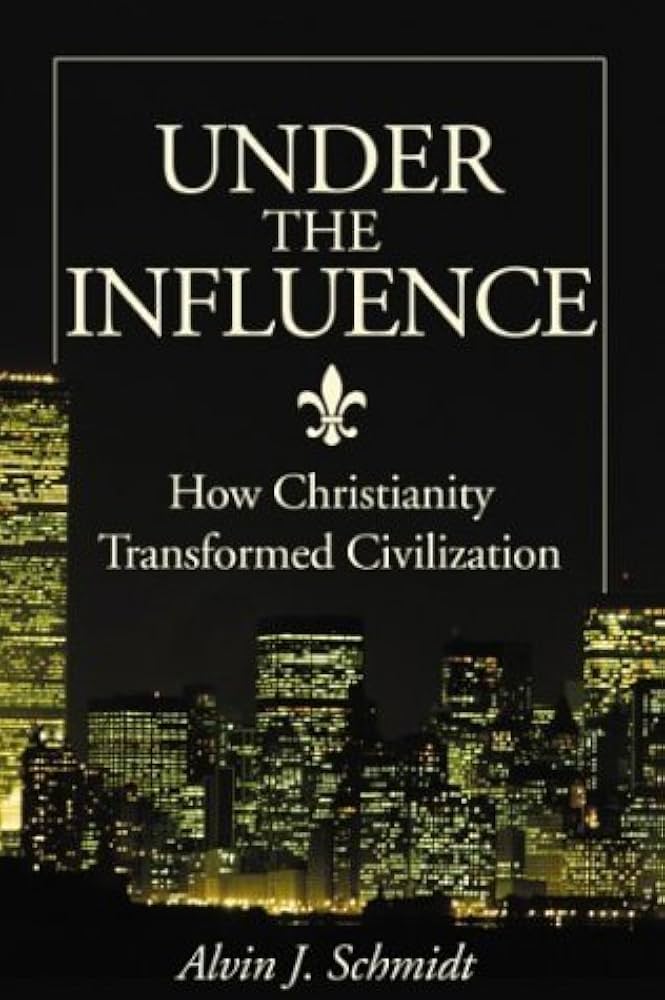
Under the Influence: How Christianity Transformed Civilization
Author: Alvin J. Schmidt
Translator: Xiao Dan Wang, Wei Zhao
Publisher: Peking University
「基督教對文明的影響」
本書以其細微的審慎展示了我們有多少現行制度都是在教會中發端和發展起來的,人類文化的各個分支中又有多少東西是屬於基督教的。
全書從生命尊嚴、性道德、婦女地位、慈善、醫療保健、教育、經濟、科學、政治、文學、藝術等各個方面,揭示了現代社會許多現行制度和價值觀念的基督教淵源,闡明了基督教對人類文明的深刻影響。
作者還指出,在世俗主義和相對主義盛行的後現代社會,基督教對文明的積極影響正在面臨嚴峻的挑戰。
Under the Influence: How Christianity Transformed Civilization
This book, with its meticulous and careful examination, reveals how many of our current systems originated and developed within the Church, and how much of human culture is rooted in Christianity.
Throughout the book, covering topics such as the dignity of life, sexual morality, the status of women, charity, healthcare, education, economics, science, politics, literature, and art, it exposes the Christian origins of many current systems and values in modern society, elucidating the profound influence of Christianity on human civilization.
The author also points out that in postmodern society, where secularism and relativism prevail, the positive influence of Christianity on civilization is facing serious challenges.
目錄 Table of Contents
前言
導言 信靠那值得信靠的
第一章 被耶穌基督改變的人
基督改變祂的門徒
更多被改變的人
第一個殉道者司提反
掃羅(保羅)
殉道者的隊伍
一些被改變的皇帝
20世紀被改變的人
結語
第二章 生命的神聖
反對殺嬰陋習
反對棄嬰惡俗
反對墮胎陋習
反對角鬥表演陋習
君士坦丁與康士坦丟頒布的道德法
反對人體獻祭陋習
反對自殺陋習
墓葬屍體,而非火化
結語
第三章 基督教提高了性道德觀
反對混亂的性濫交
反對同性戀
雞姦(戀童癖)
成年男性間的同性戀
女性同性戀
反對獸姦
基督教對性和婚姻的影響
婚姻被賦予尊嚴
婚姻隱私
結語
第四章 婦女獲得自由與尊嚴
希臘婦女的低下地位
羅馬婦女的低下地位
希伯來婦女的低下地位
基督賜給婦女自由與尊嚴
撒瑪利亞婦人
馬大與馬利亞的故事
耶穌向馬大講道
耶穌復活後向婦女顯現
婦女跟隨耶穌
使徒時代的教會歡迎婦女
基督教對婦女的吸引力
一些不正常的現象
基督之道最終得勝
新類型的家庭標準
新娘的自由
除掉面紗
取消一夫多妻
寡婦受重視,不再作陪葬
中國女人裹小腳被廢除
封閉陰道術被廢除
結語
第五章 愛與憐憫:基督徒的連結
基督徒的慈善與希臘羅馬人的給予
憐憫:基督教的一項創新
對孤兒的愛與憐憫
對老年人的關懷
透過自願性團體進行的基督教慈善事業
美國慈善事業
兄弟共濟會
同仁福利社
基督教青年會
基督教女青年會
童工法
從基督教慈善事業到國家福利
結語
第六章 植根於基督教的醫院與保健
身體與靈魂的醫治者-耶穌
異教遺留的空缺
遠古時的醫院
最早的基督教醫院
新大陸的醫院
治療精神疾病的機構
醫療照護:基督教的一個創新
紅十字會
結語
第七章 基督教在教育上留下的烙印
早期的基督徒教育
兩性同等接受教育
超越階級與種族:普世教育
稅收支持的公立學校
義務教育
分級教育
幼兒園的概念
聾人教育
盲人教育
主日學
大學的基督教淵源
修道院-大學的雛形
學術研究:起源於修道院
美國的學院與大學之起源
結語
第八章 勞動和經濟自由的尊嚴
勞動的高貴與尊嚴
工作的尊嚴得到加強
工作是一種呼召(天職)
勞工當得工資
勞動的尊嚴產生了中產階級
新教(基督教)的工作倫理
財產權和個人自由
經濟自由的尊嚴
經濟自由與資本主義的關係
追求利潤受尊重
經濟自由,福音,以及1492年
詹姆斯敦和普利茅斯社會主義的失敗
基督教的時間觀念
結語
第九章 科學與基督教的關係
科學的背後是基督教的預設
基督徒,科學的先鋒
奧卡姆剃刀
人體生理學和生物學
天文學
物理學
化學
醫學
結語
第十章 給人以自由和公正
無人凌駕於法律之上
兩個或兩個以上的見證人
聖安布羅斯與皇帝的抗爭
大憲章
自然法與自然權利
美國《獨立宣言》
《美國憲法》
個人的自由和權利
人人平等
教會與國家的分離
結語
第十一章 廢除奴隸制度-基督教的成就
早期基督徒反對奴隸制度
某些基督徒縱容奴隸制度的歧誤
英國奴隸制度的復闢及其廢除
美國的奴隸制度及其廢除
基督教神職人員對廢奴運動的影響
非神職人員在廢奴運動中的角色
基督教對哈麗特·比徹·斯託的影響
基督教對奴隸的支持
第一個 反奴隸制度宣言
美國公民權與基督徒的關係
結語
第十二章 基督教在藝術和建築上留下的印記
早期基督教藝術
中世紀的基督教藝術
歌德式教堂建築
拜佔廷教堂藝術與建築
文藝復興時期的藝術家及其藝術
從莊嚴到非理性
現代教堂建築的衰落
結語
第十三章 音樂之聲:基督教的共鳴
早期的教會音樂
中世紀的音樂革新
格列高利聖歌
教堂歌劇
複調音樂
無伴奏聖歌
小曲
聖歌
宗教劇
交響樂
奏鳴曲
清唱劇
協奏曲
宗教改革與後宗教改革時期的音樂
馬丁路德
約翰·塞巴斯蒂安·巴赫
喬治·弗雷德里克·亨德爾
基督教的影響力反映在其他一些偉大音樂家身上
一些偉大的讚美詩和歌曲
《主是堅固避難所》
《現在我們都來感謝我們的神》
廣為傳唱的三一頌
《千古保障歌》
《平安夜》
教會作為音樂藝術的資助者和促進者
現代音樂的革命性音符
搖滾樂
輕搖滾樂
「基督教」搖滾樂
結語
第十四章 紙傳墨載的基督教影響
早期教會作品
勸勉著作
辯論性著作
護教著作
某些文獻史冊:中世紀初期至2000年
優西比烏的《教會史》
《上帝之城》
《英吉利教會史》
《修辭與美德》
《大著作》
《神曲》
《坎特伯雷故事集》
《愚人頌》
《致基督徒貴族的公開信》
《奧斯堡信經》
《烏托邦》
《基督教要義》
《新天文學》
《天路歷程》
《失樂園》
《思想錄》
《國富論》
《羅馬帝國衰亡史》
歌德的《浮士德》
《聖誕歡歌》
《湯姆叔叔的小屋》
《卡拉瑪佐夫兄弟》
《賓虛》
《新教倫理與資本主義精神》
《基督教會的社會教義》
《魔鬼書信集》
《返璞歸真》
結語
第十五章 其他印記:節慶、文字、符號和字彙表述
假日
禮拜日
聖誕節
復活節
萬聖夜
感恩節
普通詞彙與標記
公元前和公元
洗禮
大教堂
墓園
小教堂
命名
基督徒
聖誕樹
教會
信條
(基督教的)十字架
天國與地獄
異端
殉道士
異教
牧區
牧師
聖誕老公公
三位一體
成語與慣用語
好撒瑪利亞人
避瘟似的躲開
弟兄
多疑的多馬
不義之財
福音真理
馴良像鴿子
一個猶大
拆東牆補西牆
肉中刺
轉過另一邊臉來
入境隨俗
披著羊皮的狼
基督徒的名字
結語
英漢譯名對照表
譯後記
Foreword
Introduction: Trusting in the Trustworthy
Chapter 1: People Changed by Jesus Christ
Christ Changed His Disciples
More People Changed
Stephen, the First Martyr
Saul (Paul)
The Ranks of Martyrs
Some Emperors Changed
People Changed in the 20th Century
Conclusion
Chapter 2: The Sacredness of Life
Against Infanticide
Against the Vulgarity of Abandoning Infants
Against the Vulgarity of Abortion
Against the Vulgarity of Gladiator Shows
The Moral Laws Promulgated by Constantine and Constantinople
Against the Vulgarity of Human Sacrifice
Against the Vulgarity of Suicide
Burial of Bodies, Not Cremation
Conclusion
Chapter 3: Christianity Enhances Sexual Morality
Against Promiscuity
Against Homosexuality
Sodomy (Pedophilia)
Homosexuality Among Adult Men
Female Homosexuality
Against Bestiality
The Influence of Christianity on Sex and Marriage
Marriage Gains Dignity
Marital Privacy
Conclusion
Chapter 4: Women Gain Freedom and Dignity
The Low Status of Greek Women
The Low Status of Roman Women
The Low Status of Hebrew Women
Christ Grants Women Freedom and Dignity
The Samaritan Woman
The Story of Martha and Mary
Jesus Preaching to Martha
Jesus Appears to Women After His Resurrection
Women Follow Jesus
The Church in the Apostolic Age Welcomes Women
The Attraction of Christianity to Women
Some Abnormal Phenomena
The Ultimate Triumph of the Way of Christ
New Types of Family Standards
The Freedom of the Bride
Removing the Veil
Abolishing Polygamy
Widows Gain Respect and No Longer Must Be Buried with Their Husbands
The Abolition of Foot Binding in China
The Abolition of Vaginal Closure
Conclusion
Chapter 5: Love and Compassion: The Christian Connection
Christian Charity and the Giving of the Greco-Romans
Compassion: An Innovation in Christianity
Love and Compassion for Orphans
Care for the Elderly
Christian Charity Through Volunteer Groups
American Charity
Freemasonry
Tongren Welfare Society
YMCA
YWCA
Child Labor Law
From Christian Charity to National Welfare
Conclusion
Chapter 6: Hospitals and Healthcare Rooted in Christianity
Jesus, Healer of Body and Soul
The Void Left by Paganism
Ancient Hospitals
The Earliest Christian Hospitals
Hospitals in the New World
Institutions Treating Mental Illness
Medical Care: An Innovation in Christianity
The Red Cross
Conclusion
Chapter 7: The Imprint of Christianity on Education
Early Christian Education
Equal Education for Both Sexes
Beyond Class and Race: Universal Education
Tax-Supported Public Schools
Compulsory Education
Graded Education
The Concept of Kindergarten
Education for the Deaf
Education for the Blind
Sunday School
The Christian Origins of Universities
Convents – The Prototype of Universities
Academic Research: Originating in Convents
The Origins of Colleges and Universities in the United States
Conclusion
Chapter 8: The Dignity of Labor and Economic Freedom
The Nobility and Dignity of Labor
The Enhancement of the Dignity of Work
Work as a Calling (Call of God)
Workers Deserve Wages
The Dignity of Labor Created the Middle Class
The Protestant (Christian) Work Ethics
Property Rights and Individual Freedom
The Dignity of Economic Freedom
The Relationship Between Economic Freedom and Capitalism
The Respect for Profit-Seeking
Economic Freedom, the Gospel, and 1492
The Failure of Jamestown and Plymouth Socialism
The Christian Concept of Time
Conclusion
Chapter 9: The Relationship Between Science and Christianity
The Presuppositions of Christianity Behind Science
Christians, Pioneers of Science
Occam’s Razor
Human Physiology and Biology
Astronomy
Physics
Chemistry
Medicine
Conclusion
Chapter 10: Giving People Freedom and Justice
No One Is Above the Law
Two or More Witnesses
St. Ambrose’s Struggle Against the Emperor
Magna Carta
Natural Law and Natural Rights
The American Declaration of Independence
The U.S. Constitution
Individual Freedom and Rights
Equality for All
The Separation of Church and State
Conclusion
Chapter 11: The Abolition of Slavery—An Achievement of Christianity
Early Christians Opposed Slavery
The Misconceptions of Some Christians Tolerating Slavery
The Restoration and Abolition of Slavery in England
Slavery and Its Abolition in the United States
The Influence of Christian Clergy on the Abolitionist Movement
The Role of Non-Clergy in the Abolitionist Movement
The Influence of Christianity on Harriet Beecher Stowe
Christian Support for Slavery
The First The Declaration of the War on Slavery
The Relationship Between American Citizenship and Christians
Conclusion
Chapter 12: The Imprint of Christianity on Art and Architecture
Early Christian Art
Medieval Christian Art
Gothic Church Architecture
Byzantine Church Art and Architecture
Renaissance Artists and Their Art
From Solemnity to Irrationality
The Decline of Modern Church Architecture
Conclusion
Chapter 13: The Sound of Music: The Resonance of Christianity
Early Church Music
Medieval Musical Innovations
Gregorian Hymns
Church Operas
Polyphony
Acappella Hymns
Ditty
Hymns
Religious Dramas
Symphony
Sonatas
Oratorios
Concertos
Music of the Reformation and Post-Reformation Periods
Martin Luther
Johann Sebastian Bach
Georg Frederick Handel
The Influence of Christianity Reflected in Other Great Musicians
Some Great Hymns and Songs
“The Lord Is a Strong Refuge”
“Now We All Give Thanks to Our God”
The Widely Sung Trinitarian Hymn
“The Eternal Fortress”
“Silent Night”
The Church as Sponsor and Promoter of Musical Arts
Revolutionary Notes in Modern Music
Rock and Roll
Light Rock and Roll
“Christian” Rock and Roll
Conclusion
Chapter 14: The Influence of Christianity Through Paper and Ink:
Early Church Works
Exhortatory Writings
Debate Writings
Apologetic Writings
Selected Historical Documents: Early Middle Ages to 2000
Eusebius’s History of the Church
The City of God
History of the English Church
Rhetoric and Virtue
The Great Work
The Divine Comedy
The Canterbury Tales
The Hymn of Fools
An Open Letter to the Christian Nobles
The Augsburg Creed
Utopia Institutes of the Christian Religion
New Astronomy
The Pilgrim’s Progress
Paradise Lost
Pensées
The Wealth of Nations
The History of the Decline
Fall of the Roman Empire
Goethe’s Faust
A Christmas Carol
Uncle Tom’s Cabin
The Brothers Karamazov
Ben-Hur
The Protestant Ethic and the Spirit of Capitalism
The Social Doctrine of the Christian Church
The Devil’s Letters
Back to Basics
Conclusion
Chapter 15: Other Imprints: Festivals, Words, Symbols, and Vocabulary
Holidays
Sundays
Christmas
Easter
Halloween
Thanksgiving
Common Vocabulary and Symbols
BC and AD
Baptism
Cathedrals
Cemeteries
Chapels
Naming
Christians
Christmas Trees
Churches
Creeds
(Christian) Cross
Heaven and Hell
Hereticals
Martyrs
Paganism
Pastoral District
Pastors
Santa Claus
Trinity
Idioms and Common Sayings
Good Samaritan
Avoiding like the plague
Brothers
Doubting Thomas
Ill-gotten gains
Gospel Truth
Dove-like docility
A Judas
Robbing Peter to pay Paul
A thorn in one’s side
Turning the other cheek
Adapting to local customs
A wolf in sheep’s clothing
Christian Names
Conclusion
English-Chinese Translation Table
Translator’s Afterword
詳細資料 Other Book Details
ISBN:9787301077023
出版日期: 2004 年 09月 01日
頁數: 408 頁
尺寸:148 mm x 210 mm
重量: 310 克
語言:簡體中文
裝幀: 平裝
適用對象: 適用所有人
ISBN: 9787301077023
Publication Date: 09-01-2004
Pages: 408 pages
Dimensions: 148 mm x 210 mm
Weight: 310 grams
Language: Simplified Chinese
Binding: Paperback
Target Audience: All People
作者簡介 About the Author
施密特牧師博士是伊利諾伊州傑克遜維爾伊利諾伊學院的榮譽社會學教授,也是宗教科學研究學會的成員。他著有多本書籍,包括獲獎作品《兄弟會組織》(1980年)、《基督教如何改變世界》(2004年;現已翻譯成八種語言)和《路德教身份的標誌》(2017年)。
Rev. Dr. Alvin J. Schmidt is professor of sociology emeritus at Illinois College in Jacksonville, Illinois, and a fellow of the Society for the Scientific Study of Religion. He is the author of numerous books, including the award-winning Fraternal Organizations (1980), How Christianity Transformed Civilization (2004; now in eight different languages), and Hallmarks of Lutheran Identity (2017).