
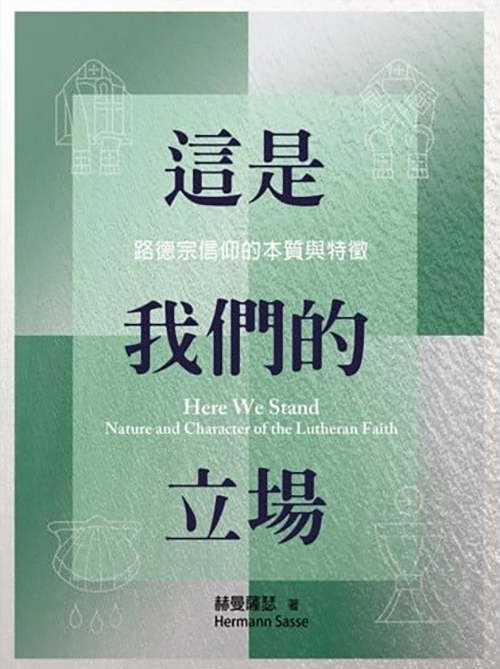
「這是我們的立場 – 路德宗信仰的本質與特徵」
作者:赫曼薩瑟
譯者:路德會翻譯小組
出版社: 福音路德會華人宣道協會
Here We Stand: Nature and Character of the Lutheran Faith
Author: Hermann Sasse
Translator: Lutheran Translation Group
Publisher: ELMSC
「這是我們的立場 – 路德宗信仰的本質與特徵」
本書旨為教會改革運動所堅持的信仰立場「正本清源」,書名因而訂為「這是我們的立場」,歷史總是一再重演,在今日多元主義和自由主義盛行的文化氛圍中,許多以「信義」、「路德」、「福音派」為名的基督新教,已漸流失或模糊了教會改革的原旨,與對純正信仰的堅持。本書的出版或可作為回到正統的初階。
作者以奧斯堡信條為中心,表達了當初路德及威登堡教會改革團隊,對教會本質的發現及對宣教的堅持,並闡述了延續這個立場與信念的路德宗教會,未能接受類超宗派式的教會聯合活動的關鍵。本書亦同步探討了「路德宗」與「改革宗」在聖經教導上的不同,以利讀者理解,基督新教產生不同宗派的基本緣由。
Here We Stand: Nature and Character of the Lutheran Faith
This book aims to “restore” the fundamental tenets of the Church Reformation movement, hence the title “Here We Stand.” History often repeats itself; in today’s pluralistic and liberal cultural atmosphere, many Protestant groups using names like “Faith,” “Luther,” or “Evangelical” have gradually lost sight of or blurred the original intent of the Church Reformation and their commitment to pure faith. This book may serve as a starting point for returning to orthodoxy.
Centering on the Augsburg Confession, the author expresses the discoveries about the essence of the church and the commitment to missionary work made by Luther and the Wittenberg Church Reformation team. It also explains why the Lutheran Church, which continued this position and belief, failed to accept quasi-denominational church unity activities. The book also explores the differences in Biblical teaching between “Lutheranism” and “Reformed-ism” to help readers understand the fundamental reasons for the emergence of different denominations within Protestantism.
內容簡介:本書回應一個問題:「何謂路德宗?」並提到了解路德宗教會就必須了解路德宗的教會改革,不是從英雄史觀、文化史觀、民族主義的角度,乃是從教會重新發現與宣講福音的角度。作者提到,路德宗於教會改革時期所提出奧斯堡信條,表達路德宗的本質與特徵,以及路德宗在福音與聖禮上無法與其他教會聯合的關鍵。這堅持信仰告白的主張震撼了西方教會,激盪出各樣不同的信條教會,並在教義上各有主張。本書探討與路德宗同時期的改革宗在教義上的不同,藉此表達了路德宗信仰的立場。
Synopsis: This book addresses the question, “What is Lutheranism?” and emphasizes that understanding the Lutheran church requires understanding its church reformation—not from a heroic, cultural, or nationalist perspective, but from the perspective of the church rediscovering and preaching the Gospel. The author mentions that the Augsburg Confession, proposed during the Lutheran Reformation, expresses the essence and characteristics of Lutheranism, and the key reason why Lutheranism could not unite with other churches on the Gospel and sacraments. This insistence on confession of faith shook the Western church, inspiring various doctrinal churches with their own doctrinal positions. This book explores the doctrinal differences between Lutheranism and Reformed churches of the same period, thereby expressing the Lutheran faith’s stance.
目錄 Table of Contents
中文版簡介
原著者簡介
美國版序
英譯者前言
中譯前言
第一部 世界當今所發的問題
第一章 何謂路德宗
第二部 教會改革運動的究竟
第一章 本於英雄史觀的詮釋
第二章 本於文化史觀點的詮釋
第三章 民族主義角度的詮釋
第四章 教會歷史中的一個篇章
第三部 路德宗教會的究竟
第一章 路德宗教會改革運動與西方教會
第二章 路德宗堅持信仰告白的主張
第一節 教會改革運動與認信問
第二節 路德宗與改革宗教會
第三章 路德宗與改革宗教會之教義差異
第一節 福音
第二節 信
第三節 教會
第四節 稱義與預定
第五節 道成肉身與實體臨在
第四章 路德宗教義與卡爾巴特的現代改革宗神學
第一節 覺醒者巴特
第二節 巴特神學中的新意
第三節 改革宗神學家巴特
第四節 巴特神學的兼容與聯合特徵
第五章 路德宗教會與獨一聖教會
Introduction to the Chinese Edition
About the Original Author
Preface to the American Edition
Translator’s Preface to the English Edition
Translator’s Preface to the Chinese Edition
Part One: The Problems Facing the World Today
Chapter One: What is Lutheranism?
Part Two: The Essence of the Church Reformation Movement
Chapter One: An Interpretation Based on the Heroic View of History
Chapter Two: An Interpretation Based on the Perspective of Cultural History
Chapter Three: An Interpretation from a Nationalist Perspective
Chapter Four: A Chapter in Church History
Part Three: The Essence of the Lutheran Church
Chapter One: The Lutheran Reformation Movement and the Western Church
Chapter Two: Lutheranism’s Adherence to the Confession of Faith
Section One: The Church Reformation Movement and the Question of Confession
Section Two: Lutheranism and the Reformed Church
Chapter Three: Doctrine Differences Between Lutheranism and the Reformed Church
Section One: The Gospel
Section Two: Faith
Section Three: The Church
Section Four: Justification and Predestination
Section Five: The Incarnation and Substantial Presence
Chapter Four: Lutheran Doctrine and Karl Barth’s Modern Reformed Theology
Section One: Barth, the Awakened One
Section Two: New Ideas in Barth’s Theology
Section 3: Barth, the Reformed Theologian
Section 4: The Inclusive and Unifying Characteristics of Barth’s Theology
Chapter 5: The Lutheran Church and the One Holy Church
詳細資料 Other Book Details
ISBN:9781934328262
出版日期: 2024 年 06月 01日
頁數:272 頁
尺寸:175 mm x 236 mm
重量:480 克
語言:繁體中文
裝幀: 平裝
適用對象: 適用所有人
ISBN: 9781934328262
Publication Date: 06-01-2024
Pages: 272 pages
Dimensions: 175 mm x 236 mm
Weight: 480 grams
Language: Traditional Chinese
Binding: Paperback
Target Audience: All People
作者簡介 About the Author
赫曼薩瑟(Hermann Sasse)(1895-1976)是一位神學學者,也是牧師,原籍德國,後來移居澳洲。他在兩方面特別為人所知:一是他很早就投入反對德國國家社會主義的奮鬥,二是他堅心用路德宗信條來作當代教會生活及普世教會見證的基石。他在柏林受高等教育,從學於卡爾霍爾、哈納克、西柏格、戴斯曼,之後赴美國哈特福神學院進行了一年博士後研究(1925-1926)。他意識到自己因受威廉洛赫所著《教會三論》的影響而成了認信的路德宗。他於1933年受聘到爾朗根大學任教,並在該處執教直到1948 年。他與潘霍華、麥爾慈、威廉威夏、波德施溫共同起草了1933 年的伯特利信條,在1948年退出了巴伐利亞教會。次年,他接受了澳洲北艾德雷的以馬內利神學院之聘,到該院任教,終其餘生。
Hermann Sasse (1895-1976) was a theological scholar and pastor, originally from Germany, who later emigrated to Australia. He is best known for two things: his early involvement in the struggle against German National Socialism and his unwavering commitment to using Lutheran Creed as the cornerstone of contemporary church life and the witness of the universal church. He received his higher education in Berlin, studying under Karl Hall, Harnack, Siebberg, and Dessmann, before pursuing a year of postdoctoral research at Hartford Theological Seminary in the United States (1925-1926). He realized that he had become a confessor of Lutheranism due to the influence of Wilhelm Loch’s Three Treatises on the Church. In 1933, he was appointed to teach at the University of Erlangen, where he taught until 1948. He co-authored the Bethel Creed of 1933 with Dietrich Bonhoeffer, Mieltz, Wilhelm Wieshar, and Podschwin, and withdrew from the Bavarian Church in 1948. The following year, he accepted a position at Emmanuel Theological Seminary in North Adelaide, Australia, where he taught for the rest of his life.

